When Serums Became Your Support System: The Emotional Weight of the Solo Skincare Ritual
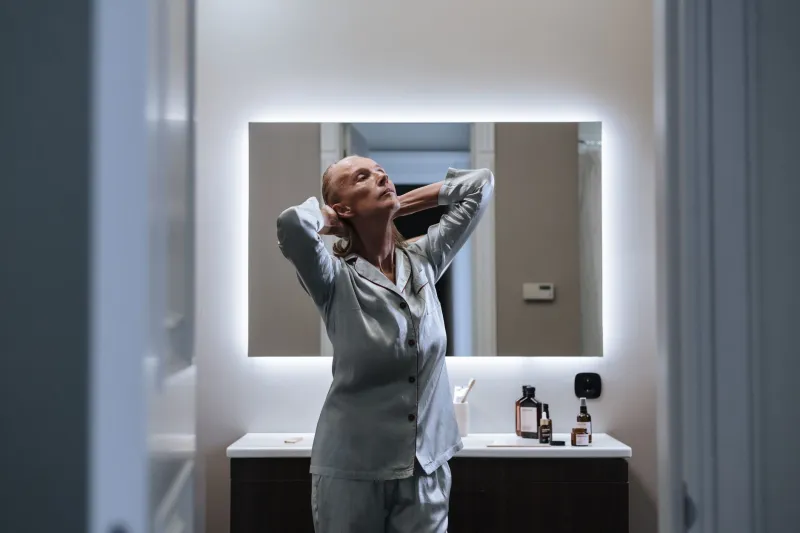
There's a particular kind of comfort in the routine. Cleanser first, then toner, then the serum you saved up three paychecks for — and somewhere in those ten quiet minutes, the day starts to feel manageable again. Your bathroom doesn't judge you. Your vitamin C serum doesn't cancel plans last minute. Your moisturizer is just there, every single night, reliable in a way that a lot of people in your life maybe aren't.
If that hit a little close to home, you're not alone. Across the US, beauty and wellness routines have quietly evolved into something far more emotionally loaded than a simple hygiene habit. And while nobody's here to shame you for loving your skincare — genuinely, keep doing what makes you feel good — it's worth asking a real question: when did the glow-up become a stand-in for genuine human connection?
The Ritual as Refuge
Psychologists have long understood that repetitive, sensory rituals can regulate anxiety. The act of following a sequence — the texture of a cleanser, the cool press of a jade roller, the faint scent of a face oil — activates the parasympathetic nervous system. Basically, your body reads it as safe. That's real, and it's valid.
But something shifted over the past few years, accelerated heavily by pandemic-era isolation. When human contact became physically dangerous and then socially complicated, a lot of people leaned harder into solo rituals. Skincare content exploded on TikTok. "Skin flooding" and "slugging" became collective experiences — millions of people doing the same thing alone in their bathrooms, together but not really. The ritual filled a gap.
The problem isn't that the ritual is comforting. It's that comfort and connection are not the same thing, even when they feel interchangeable at 11pm on a Tuesday.
Why Beauty Makes Such a Convincing Substitute
Skincare is uniquely good at mimicking the emotional rewards of a relationship. Think about it: it's attentive (you study your skin the way you'd study someone you love), it's responsive (you adjust your routine based on how your skin reacts), and it gives you visible results. You put in effort, and something comes back. That feedback loop is deeply satisfying in a world where emotional investments in other people often feel uncertain, exhausting, or outright unrequited.
Beauty brands — consciously or not — have leaned into this dynamic hard. The language around skincare has shifted from clinical to intimate. Products promise to "listen to your skin." Routines are marketed as "me time" and "self-love." Your nighttime regimen is framed as a relationship with yourself, which sounds beautiful until you realize the person selling you that $68 toner has a financial interest in you finding your bathroom more fulfilling than your social life.
This isn't a conspiracy theory — it's just capitalism being capitalism. But it's worth clocking.
The Line Between Self-Care and Self-Soothing
Here's where it gets uncomfortable. Self-care, at its core, is about maintaining yourself so you can show up — for your own life, for the people in it, for the things that matter. Self-soothing is about making unbearable feelings temporarily bearable. Both are human and necessary. But when self-soothing becomes the primary tool in your emotional toolkit, it stops being maintenance and starts being avoidance.
Ask yourself honestly: Are you doing your skincare routine because it genuinely makes you feel healthy and grounded? Or are you doing it because it's the only part of your evening that feels fully within your control? Are you excited to try a new product because it's fun — or because shopping for it gave you something to look forward to in a week that otherwise felt pretty empty?
Neither answer makes you broken. But one of them deserves more than a new serum.
Loneliness Has a Glow-Up Problem
America has a loneliness crisis — the Surgeon General literally issued an advisory about it in 2023, calling it a public health epidemic. Adults are reporting fewer close friendships, less community belonging, and more time spent in digital spaces that simulate connection without delivering it. Into that void, wellness culture rushed in with open arms and a very good marketing budget.
And look — there are worse ways to cope. Skincare isn't harming you the way other avoidance behaviors might. But the cultural narrative that frames an elaborate beauty ritual as the ultimate form of self-love does a quiet disservice to people who are genuinely lonely. It tells them that the solution to an empty social life is a fuller bathroom shelf. It reframes isolation as independence. It makes solitude look aspirational when, for a lot of people, it's actually just sad.
A ten-minute routine can make you feel seen by yourself. That matters. But it cannot replace the feeling of being seen by another person — and pretending it can is a gentle lie the wellness industry tells you while charging $45 for a face mist.
So What Do You Actually Do With This?
First: don't throw out your skincare. Genuinely. The ritual itself isn't the issue — the emotional weight you're placing on it might be.
Start by getting honest about what the routine is doing for you. If it's grounding you before sleep, great. If it's the emotional highlight of your day and everything else feels hollow, that's information worth sitting with.
Second, consider whether the energy you're putting into researching actives, layering products, and optimizing your routine could partially redirect toward something social. Not instead of — alongside. That same curiosity and care you bring to your skin? Other people would love to be on the receiving end of it. You might be surprised.
And third — if loneliness is genuinely a persistent feeling in your life, please talk to someone about it. A therapist, a trusted friend, a community group, whatever feels accessible. Not because your skincare routine is bad, but because you deserve more than what a bathroom counter can give you.
The Bottom Line
Your skincare routine can be meaningful. It can be grounding, joyful, and genuinely good for you. But it was never designed to be a relationship. The fact that so many of us have quietly let it become one says less about our routines and more about how starved we are for consistency, care, and the simple feeling of being tended to.
You deserve to be tended to by people, too. That's not a knock on your serum. It's just the truth.