The Trend Cycle Ate Itself: Why Gen Z's Beauty Revival Is More Complicated Than Nostalgia
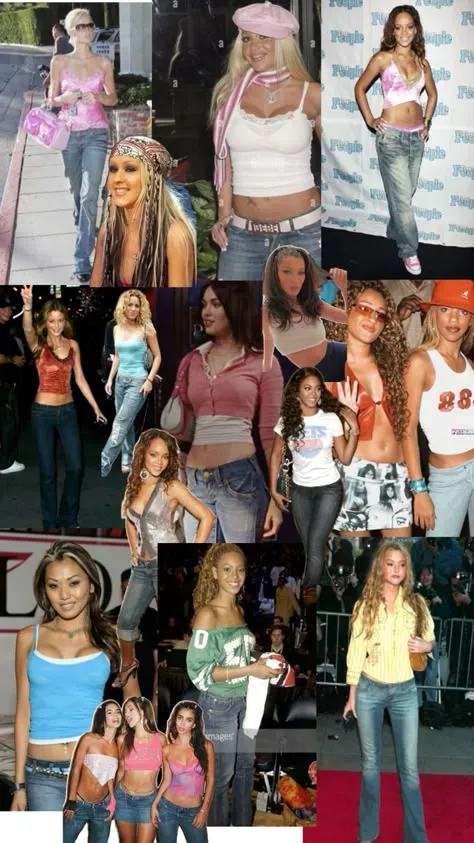
Photo: Y2K early 2000s makeup beauty trend nostalgia butterfly clips glossy lips, via i.pinimg.com
Let's set the scene. It's 2003. You're watching TRL on MTV, and every celebrity on screen has the same look: overplucked brows, frosted eyeshadow, a lip liner that's two shades darker than the gloss on top, and a body that the fashion industry has decided is the only acceptable kind. Fast forward twenty years, and that exact aesthetic is showing up on your For You page, on runways, and in the drugstore beauty aisle — except now it's being called a "vibe" instead of a standard.
Gen Z's relationship with Y2K beauty is genuinely fascinating to watch. There's real creative energy in it. But there's also something worth examining underneath the surface glitter, because not everything that looks like a throwback is actually innocent nostalgia.
When Revival Meets Revisionism
Here's the thing about trend cycles: they never bring everything back. They curate. The early 2000s look that's currently having a moment has been carefully edited for contemporary consumption. The fun parts — the butterfly clips, the chunky highlights, the unapologetically maximalist makeup — those came back first and loudest. The more troubling parts of that era took a little longer to resurface, but they're here now too.
The return of extremely low-rise jeans and the reemergence of very specific body proportions being treated as aspirational didn't happen in a vacuum. It happened in the same cultural moment when Y2K nostalgia was being aggressively marketed to Gen Z — a generation that was either too young to remember that era firsthand or wasn't born yet. And that gap matters.
Millennials who actually lived through the early 2000s as teenagers carry specific memories attached to those trends. They remember the diet culture that was inescapable in teen magazines. They remember the way certain body types were mocked openly in mainstream media. They remember how it felt to be told their natural brows were wrong. Gen Z doesn't carry that baggage — and while that can be genuinely freeing, it also means the era's most harmful elements can be reintroduced without the same alarm bells going off.
The Nostalgia Marketing Machine Is Very Good at Its Job
Let's be real about what's actually driving a lot of this: the beauty and fashion industries are exceptionally skilled at monetizing the past. Nostalgia is one of the most reliable emotional triggers in marketing — it creates a sense of warmth and familiarity that bypasses critical thinking. When a brand packages a trend with enough vintage-coded aesthetics, it stops feeling like a product being sold to you and starts feeling like a memory you're reclaiming.
The Y2K beauty revival has been a goldmine. Brands have rereleased discontinued products, launched "throwback" collections, and used early-2000s-coded packaging and campaigns to drive sales to consumers who have no actual connection to the original era. Meanwhile, influencers and content creators have built entire platforms around the aesthetic, creating a feedback loop where the trend feels organic and grassroots even when it's being heavily funded and amplified by corporate interests.
None of this means you can't enjoy the trend. But it does mean that "I just love this look" and "I've been marketed this look from seventeen different directions for two years" are not mutually exclusive statements.
The Brow Conversation We Keep Having to Have
Fine, let's talk about the brows specifically, because they've become a kind of cultural shorthand for this whole debate.
The ultra-thin, heavily arched brow that defined early-2000s beauty is genuinely back. And for some people — particularly those with naturally fine or light brows — this might feel like a welcome shift from the full, fluffy, laminated brow that dominated the 2010s. Beauty should be expansive enough to hold multiple ideals at once.
But the discourse around brow trends has a bad habit of treating each revival as though it exists in isolation, as though we didn't just spend a decade watching people express real pain over having over-tweezed their brows in response to the exact standard that's now being celebrated again. The trend cycle doesn't care about your regrowth journey.
What would actually be radical — more radical than any specific brow shape — is decoupling brow aesthetics from the idea that there's a correct brow at all. Wear them thin if you love it. Wear them full. Wear them wherever they naturally land. The problem was never the shape. The problem was the pressure, and that pressure doesn't disappear just because the shape changes.
Genuine Love vs. Algorithmic Conditioning
So how do you actually know if you're drawn to a trend or just marinated in it?
Honestly, it's a hard question, and there's no perfect answer. But a few things worth asking yourself: Do you like how this looks on you specifically, or do you like how it looks on the people you've been watching wear it? Does this trend require you to change something about your natural appearance in a way that feels exciting or in a way that feels like correction? Are you excited about the aesthetic or anxious about being behind if you don't adopt it?
Those questions don't have wrong answers. Sometimes you genuinely love a trend that's also being marketed to you. Sometimes nostalgia for an era you never lived through is completely legitimate — aesthetics can resonate beyond lived experience. The goal isn't to opt out of beauty culture entirely. It's to stay conscious enough that you're making choices rather than just absorbing them.
The Part Gen Z Is Actually Getting Right
Here's where credit is genuinely due: Gen Z's relationship with beauty is more self-aware than it's sometimes given credit for. The same generation reviving Y2K aesthetics is also producing some of the most incisive commentary about beauty standards, diet culture, and the toxicity of the early-2000s media landscape. The irony is often intentional. The reclamation is often thoughtful.
The problem isn't Gen Z's nostalgia. The problem is the industry that profits from it without doing any of the critical work. Brands will sell you the frosted gloss without mentioning the cultural context it came packaged in. The trend cycle will hand you the aesthetic without the accountability.
You get to decide how much of it you want to take. Just make sure it's actually a decision.