You're Not Falling Apart — You're Just Not the Same Person You Were Last Year
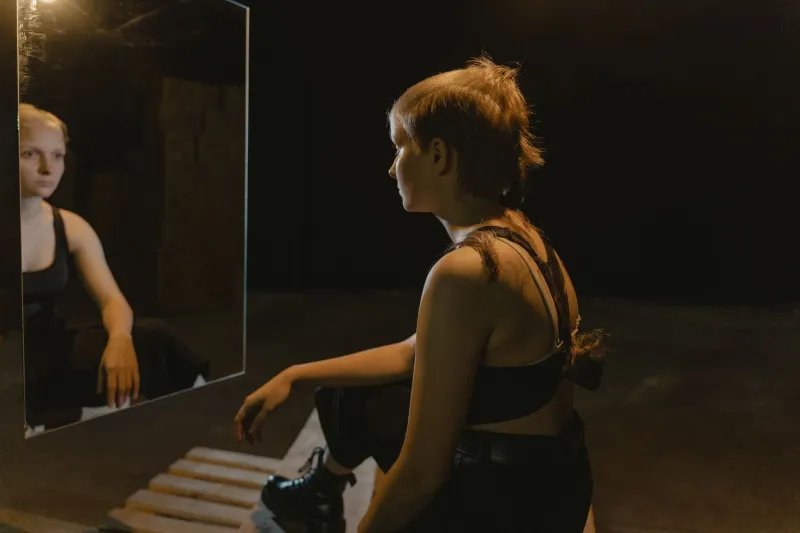
Somewhere along the way, we got sold this idea that growing up meant arriving. Like at some point — maybe after enough therapy, enough journaling, enough "finding yourself" road trips — you'd land on a final, definitive version of who you are. You'd know your aesthetic, your values, your attachment style, your love language, your career calling. Locked in. Consistent. Authentic.
And then you'd just... stay there. Forever.
Here's the thing nobody tells you: that idea is kind of a trap.
The Authenticity Myth We All Bought Into
The concept of a "true self" sounds beautiful in theory. It's comforting, even. There's a version of you that's real, and everything else is just noise or performance or people-pleasing. Find that core, protect it, express it unapologetically — and boom, you've won at being a person.
But the messier truth? Identity doesn't work like a buried treasure you dig up once and carry around forever. Psychologists have been saying this for decades. Erik Erikson's whole framework around identity development wasn't a one-and-done moment — it was a series of ongoing negotiations across your entire lifespan. You're not supposed to have it figured out at 24. Or 34. Or honestly, ever.
What we call the "authentic self" is really more like a living document. One that gets revised constantly based on new experiences, new relationships, new information about yourself and the world. And somehow, we've turned that natural process into evidence that something is wrong with us.
Why Changing Your Mind Feels Like a Betrayal
Let's be honest about why this hits so hard right now. Social media has made identity weirdly permanent. Every opinion you've ever posted, every aesthetic phase you've documented, every "this is who I am" caption — it's all still there, archived, searchable, ready to be screenshotted and thrown back at you the moment you evolve.
There's social pressure baked into that. When you used to love something and now you don't, people notice. When your politics shift, when you leave a religion, when you go from swearing by minimalism to filling your apartment with maximalist clutter — someone's going to raise an eyebrow. Someone's going to say you're "not being real" or "performing" or "going through a phase."
And that surveillance — even when it's low-key, even when it's just the imaginary audience in your own head — creates this anxiety around changing. Like growth needs to be justified. Like you owe people an explanation for becoming someone slightly different than you were.
You don't, by the way.
Different Rooms, Different You — And That's Not Fake
Here's something worth sitting with: you are genuinely a different version of yourself depending on who you're with. Not fake-different. Not performing-different. Just contextually different, the way all humans are.
You're probably more guarded with your coworkers than with your best friend. Probably more playful with your college crew than with your parents. Maybe more politically vocal in one space, more laid-back in another. That's not inauthenticity — that's social intelligence. It's called code-switching, and every single person does it.
The pressure to be exactly the same in every room, to present one unified self across all contexts, is actually kind of dehumanizing when you think about it. It flattens the complexity of who you are into a brand. And brands are static. People aren't.
The Phases You're Embarrassed About? They Counted.
Okay, let's go there. The emo phase. The "I only wear neutrals" era. The period where you were really into astrology, or CrossFit, or a particular kind of guy who was definitely not good for you. The political opinions you held at 19 that make you cringe now. The friendship group you outgrew. The career path you abandoned three years in.
None of that was wasted. None of it means you were lying about who you were — it means you were figuring it out. Every phase you moved through taught you something about what you actually value, what drains you, what lights you up. You needed the 12-step skincare routine to understand that you only actually care about three products. You needed the toxic relationship to understand what respect looks like in practice.
Those aren't detours from your "real" self. They're how the real self gets built.
Fluidity Isn't Inconsistency — It's Just Honesty
There's a version of personal growth that gets celebrated: the person who "always knew" who they were, who never wavered, who had a clear vision and executed on it. That person makes great content. Their story arc is clean.
But most of us don't live in a clean story arc. Most of us zigzag. We're certain about something until we're not. We fall in love with an idea and then fall out of it. We build a life that looks right on paper and then quietly realize it doesn't fit anymore.
That's not weakness. That's paying attention.
The people who never change — who lock in an identity at 22 and defend it aggressively for the next forty years — aren't more authentic. They're often just more rigid. And rigidity isn't the same as integrity.
So What Do You Actually Hold Onto?
None of this means nothing is real or everything is performance. There are probably some things about you that have stayed pretty consistent — your sense of humor, certain core values, the way you show up for people you love. Those threads matter. They're worth noticing.
But they're not the whole picture, and they're not the only things that count as you.
The version of yourself you are right now — with all the contradictions, the half-formed opinions, the aesthetic that doesn't totally make sense yet — is just as valid as whoever you'll be in five years. You don't have to wait until you've "figured it out" to take yourself seriously.
You're allowed to be mid-process. You're allowed to be someone who's still changing.
Actually, that's kind of the whole point.
Stop waiting to arrive. The person you are right now — uncertain, evolving, slightly different than you were last year — is already worth showing up as.